
Leading Change
We Act
The Cost of Holding Everything Too Tightly
An examination of how excessive control disguises itself as diligence, and how holding everything too tightly narrows the space where teams can grow.

The Conditions Around The Outcome
An exploration of ecological thinking and why the conditions that make an outcome possible deserve the attention we give the result.
The Politics of Space: Why Making Room Is an Ethical Act
I have been thinking about the conference room at the end of the proverbial hall in a recent engagement. It had a long rectangular table, the kind that seats twelve but really seats three. The CEO…
The Hero’s Journey Is Killing Your Organization’s Intelligence
I have watched organizations celebrate their heroes while their collective capacity atrophies. We tell stories about the leader who saved the quarter, the executive who turned the ship around, the…
The Resentment You Are Trying to Avoid
I used to believe that saying yes to everything made me a good person—a reliable friend, a supportive partner, someone who showed up when it mattered. The logic felt airtight: if I cared about…

When Control Becomes the Cage
I have watched leaders exhaust themselves trying to control outcomes they were never meant to orchestrate alone.The pattern shows up everywhere—in the manager who rewrites every team deliverable…
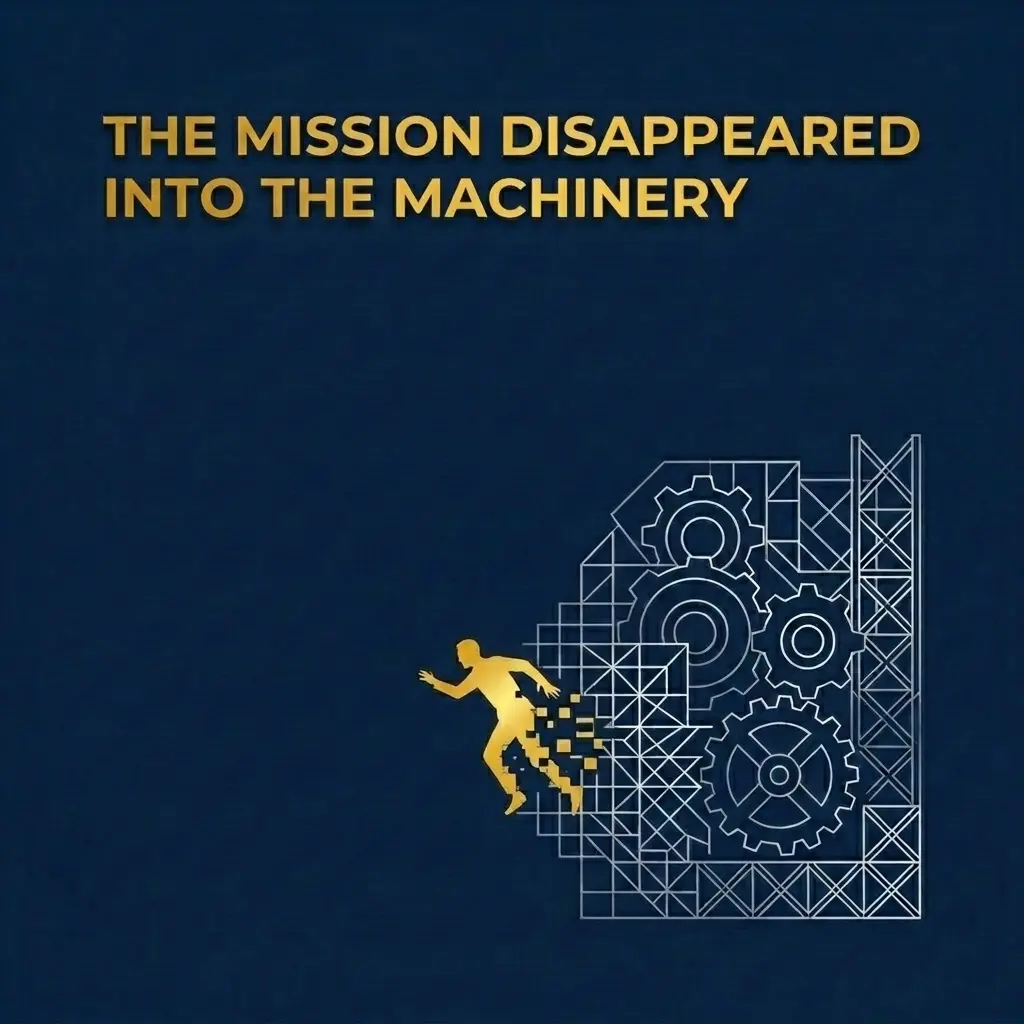
When Nonprofits Lose The Mission
I have watched organizations suffocate their own missions while believing they were protecting them. The pattern is consistent and well-documented — a gradual inversion in which operations no longer…

When The Space Tells You to Leave
I spent months in a project that was not working. The client had their diagnosis and their solutions. I had frameworks suggesting their framing was generating the problems they were trying to solve….
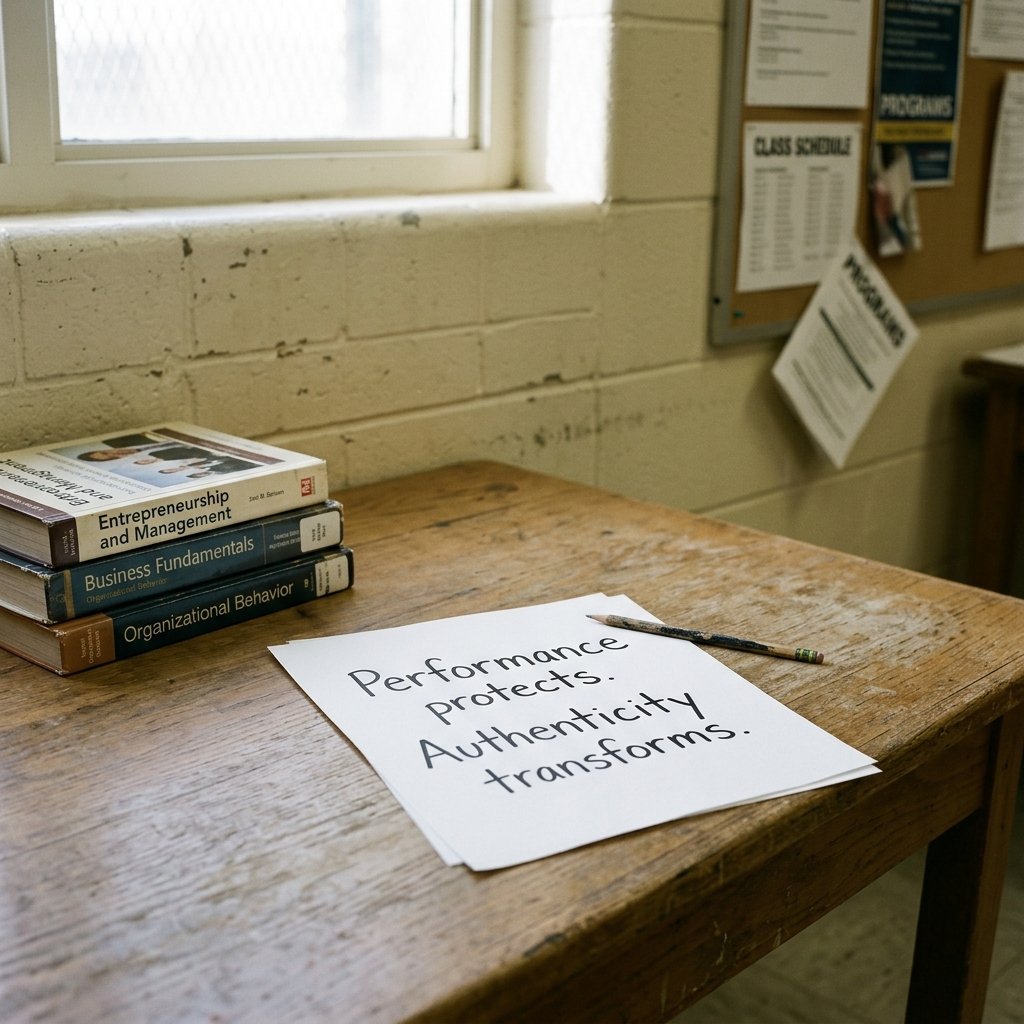
When the Performance Stops, the Learning Starts
Just a few classes into teaching business through a postsecondary prison education program, I have already learned more from my students than I could possibly teach them.

The Space Between What Worked and What Works Now
I have watched nonprofit founders navigate a particular kind of confusion that surfaces when their organizations begin to grow, and what strikes me most is how rarely anyone names what is actually…

Accountability Over Accuracy — Spaciology Chronicles
A boardroom interruption shifts the room. David chooses repair over being right—and learns how accountability can widen trust.

Space As Home (Part 3): From Heroics To Habitat
The hero’s journey is a beautiful story. It is also a dangerous default. In its modern form, the hero narrative trains us to believe that transformation is a personal achievement accomplished through willpower, certainty, and conquest.

The Philosophy of Enough
Discover why mission-driven organizations achieve deeper impact by embracing ‘enough’ rather than chasing endless growth that dilutes mission focus.

Why Slowing Down Accelerates Mission Impact
Slowing down gives organizations space to reflect, align with their mission, and focus resources for real impact.

Rethinking Transformation: More Than a Hero’s Tale
For generations, the hero’s journey has shaped how we imagine change. Its arc—departure, ordeal, return—offers a compelling story of individual transformation.

Finding Beauty in Business
Can business be beautiful? This file explores how meaningful human connection, vulnerability, and purpose can redefine our understanding of business beyond transactions.

Stepping Off the Train: Beyond Right and Wrong
In these divisive times, it feels somewhat comfortable to gravitate toward an existing train of thought. This train goes left, and this one right.

Why Care?
In a fractured world, why care? This file explores the existential and practical value of compassion, connection, and shared human experience.

Better Governance For Nonprofits
Explore how transformative leadership redefines nonprofit governance, fostering collaboration, innovation, and systemic change for greater impact.

Beyond the Hero’s Journey (Part III)
To some extent, the hero’s journey reflects and perpetuates a colonizer mindset, leading to the subjugation of entire cultures.

Beyond the Hero’s Journey (Part II)
Technology, profit, productivity—these are hallmarks of what is often construed as progress within the Western worldview? Progress for whom?

Beyond the Hero’s Journey (Part I)
Floods, wildfires, drought, biodiversity loss, habitat destruction, pollution, mass riots, war—this is the world right now in active ecological crisis.
To ‘Lead’ Or Not To ‘Lead’ (Part III)
If we think in silos, we bring ourselves deeper inside single systems.
To ‘Lead’ Or Not To ‘Lead’ (Part II)
What does social purpose mean in the context of my life? How do I apply my belief in a social purpose? How I answer these questions may provide insight into the extent to which I have retained my systemic sensibility.

To ‘Lead’ Or Not To ‘Lead’ (Part I)
Is the past really past, and is the future somewhere ahead of us? The realization that past trauma, for instance, has a direct bearing on our mental health lends credence to the notion that yesterday is alive, a consideration that leads to a cybernetic complementarity that the future is equally real today. Can we hold two seemingly disparate ideas?

Best Practices in Organizations
Recently, I had a “conversation” with an individual about next steps related to further developing a nonprofit board. Excited about some of my recent research that touches on new ways to conceptualize the role of nonprofit board development, I indicated that perhaps we could consider new ideas.

Motivation
We have all heard it. “If I were you, I would…” Is such a statement meant to motivate, or is it instead a strategy by which we assert our position in life? Is it motivation at all?

Perspective
If we are to understand an organization, we must ask certain questions first, right?
What are your job descriptions? What is your employee retention rate? Do you offer benefits? Are you profitable? What is your mission?