
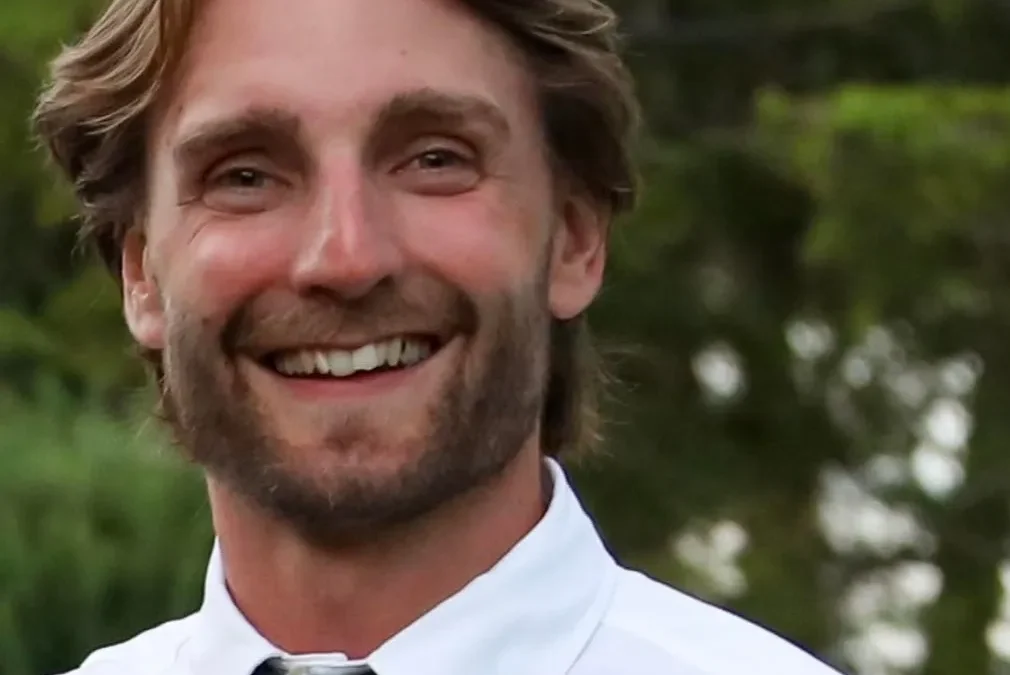
Ian Shea
This is the latest in my dialogue series where I sit down with fellow professionals to explore their expertise and learn from their unique perspectives. Today’s conversation is with Ian Shea of Black Cat Contracting, who shares his journey from TBI Recovery to Organizational Leadership.
I recently had the chance to talk with Ian, founder of Black Cat Contracting, and learn from his approach to organizational consulting. While his methodology differs from my space-based approach, I found remarkable complementarity in how we tackle complex challenges. His approach to consulting feels refreshing and unique, underscoring the importance that organizations accept and celebrate diverse perspectives rather than defaulting to one-size-fits-all solutions.
Ian is in year two of his PhD in organizational leadership at National University, targeting graduation around Halloween 2028. His focus on adaptability and resilience in VUCA (volatile, uncertain, complex, and ambiguous) environments isn’t just academic—it’s deeply personal, shaped by his recovery from a traumatic brain injury.
What struck me most about our conversation was how Ian bridges high-level theory with operational reality through his structured business framework. He starts with what he calls a “Friction Audit,” moves to a diagnostic phase, then builds a comprehensive Change Plan.
As he puts it, “I didn’t just study Adaptive Leadership in a textbook; I lived it.”
From Belief to Walking the Walk
During our conversation, Ian shared a profound personal insight about his journey. He described a fundamental shift from believing he could handle challenges to actually walking in that belief. The PhD process, he noted, has sharpened this transformation, giving him both the conceptual framework and the confidence to tackle complex organizational challenges.
This shift resonated with me because it reflects something I see often in leadership development—the gap between intellectual understanding and embodied practice. Ian’s experience recovering from his TBI seems to have accelerated this integration in ways that purely academic study might not achieve.
Reframing Construction as Leadership Development
One area where Ian pushed back during our discussion was the common narrative that construction is a dead-end career path. He emphasized the high skill requirements and strong career and income potential, especially for people who develop leadership capabilities within the industry. This perspective challenged my own assumptions about traditional blue-collar pathways.
Ian’s vision extends far beyond the jobsite, focusing instead on the engineering of organizational resilience and human infrastructure. He wants to create global connections and “affect change at the highest levels” while ensuring that people starting at the bottom feel part of something bigger. This dual focus on systemic change and individual empowerment reflects his understanding that sustainable transformation happens when high-level strategy connects with ground-level execution.
The Scholar-Practitioner Bridge
What sets Ian apart is his commitment to being both scholar and practitioner. His PhD work in organizational leadership isn’t separate from his business—it’s integral to it. This allows him to bring rigorous academic frameworks to real-world challenges while testing theoretical concepts against the demands of actual project delivery.
What fascinates me about Ian’s approach is how it mirrors core principles of Spaciology—the study of how physical and conceptual spaces shape human behavior and organizational dynamics. His “Friction Audit” essentially maps the spatial tensions within organizations, identifying where energy gets trapped or misdirected.
When he talks about bridging theory and operational reality, he is creating what I would call “relational spaces” where abstract concepts can take concrete form. This spatial thinking—understanding how ideas move through organizational terrain—may be the key to why his methodology produces such lasting change.
Discovering Potential Collaboration
What was perhaps most exciting is that our dialogue concluded with both of us recognizing a clear synergy in our approaches. I tend to bring conceptual flow and project management strengths, while Ian provides the ‘Operational Mechanics,’ the high-fidelity structural frameworks required to sustain high-pressure growth. He doesn’t just design the vision; he engineers the foundation to ensure the system can handle the ‘G-forces’ of modern volatility.
Next stop for us: collaborative space.
About Robert Levey
Founder of The Philosopher Files, Robert is a senior online adjunct faculty member at the UNH College of Professional Studies as well as a member of the Independent Philanthropy Advisor Referral Group.
About Ian Shea and Black Cat Contracting
Ian is the founder of Black Cat Contracting and a PhD candidate in organizational leadership at National University. A U.S. Air Force veteran, his practice combines construction expertise with organizational development, focusing on adaptability and resilience in complex environments. His approach bridges high-level theory with operational execution, shaped by his lived experience of recovery and transformation.
About Spaciology
Spaciology is not abstract theory; rather, it is a practice you can feel.
- Inside: Pause, breathe, notice.
- Outside: Design rooms, rituals, and agendas that slow the spin and invite care.
- Between us: Make dialogue a place where different truths can live together long enough to teach something.
Ultimately, leadership is the art of making space for what’s important (for everyone) and letting that clarity shape the next step. When we change the spaces from which we lead, our strategies change with them.
Spaciology Learning Commons
Want to go further? Join the Spaciology Learning Commons.
Membership gives you free access to community conversations, courses, introductory resources, and the complete Field Guide.
Stay in Touch
