Love(s)

Love(s)

Love is something we discuss with others (or at least should). We point to it, demand and laud it. But what is it? Are all loves the same? When we teach our kids about love, we explain it in a way that encourages them to think on it as if it were a timeless sort of thing. It is exists as some sort of truth, as if any deviation from it represents a failure on their respective part. What if love is a construct? What if how we experience love results from cultural constructs that reinforce a worldview, a theory about human life? What if love is not a definitive thing at all, but rather itself a theory that frames our experience in a way that allows us to try and make sense of it? Are all loves the same? Do you love the same way now as you did 20 years ago? Is what you felt 20 years ago not love? In 20 years, what will you think about how you love now? Perhaps love is only defined in context and in relationship with others and, in turn, our very selves. Is love a verb? Is it a noun? Is it necessarily something we can satisfactorily describe in words to others? Is love the ability to answer the demands of others in the ways they say they need? What if we think their worldview is wrong? Is love the ability to do for others in the way they need even if it contradicts our own views? Is that love, or is that disturbing? Is your version of love better than mine? Can we both be correct? Do we love the same way and for the same reasons in all circumstances? Which kinds of loves matter? What if they all matter? Do all loves ask us to do the same thing(s). Love may indeed be real, but perhaps it exists in the plural, which may in fact call into question whether any of us exactly understand when another says, “I love you.”

About Spaciology

Spaciology is not abstract theory; rather, it is a practice you can feel.

  • Inside: Pause, breathe, notice.
  • Outside: Design rooms, rituals, and agendas that slow the spin and invite care.
  • Between us: Make dialogue a place where different truths can live together long enough to teach something.

Ultimately, leadership is the art of making space for what’s important (for everyone) and letting that clarity shape the next step. When we change the spaces from which we lead, our strategies change with them.

Spaciology Learning Commons

Want to go further? Join the Spaciology Learning Commons.

  • Free membership gives you access to community conversations and introductory resources.
  • Paid membership opens full access to courses, live sessions, and the complete Field Guide.

Stay in Touch

Perspective

Perspective

If we are to understand an organization, we must ask certain questions first, right?

What are your job descriptions? What is your employee retention rate? Do you offer benefits? Are you profitable? What is your mission?

These and so many other questions are most definitely important, but does it make sense to jump right into an analysis of an organization before, in fact, we take a step back?

We are talking about perspective, which we define here for our purposes as the ability to see something in its largest context.

What are you as an organization now? Where were you before? Where are you going? Is it working well? Are there problems and/or challenges you would like to overcome? What connects all staff with one another? What might be driving them apart?

This line of questioning entails that we observe as well as reflect on what we see and hear before we jump into the kinds of questions that have binary sets of answers. If A, then B. If not B, then A. It is more complicated than that, of course, but answers to questions like, “Do you have benefits?” are easily answerable.

To gain perspective, we need to go into the gray areas of an organization in order to uncover clues to the ‘how’ and/or ‘why.’

Perspective of an organization does not begin or end within its proverbial walls. Rather, we must also consider the actual lives of the people who work there.

Are they motivated? Is this their first job? Their last? Are they parents? Grandparents? 

The roles we play outside the office have a direct bearing on how we conduct our behavior within it. Whether our staff work within an actual office or virtually, organizations operate by unwritten rules of behavior.

“This is the way the handbook says things work, but this is how it really works,” an incoming new hire might hear from a well-intentioned supervisor. Is this something we really want to hear?

Perspective is the ability to see things from many angles. It seems like an art, but it is a science, one grounded in philosophic inquiry.

If we spend actual time each day thinking about the ‘how’ and the ‘why,’ there is a better chance we will gain insight not just into a business operation, but our very selves.

Ever work for a boss who was unable to offer you perspective? There may be nothing more uncomfortable in work, or personal, life for that matter than individuals unable to contextualize to any degree the behaviors around them…

About Spaciology

Spaciology is not abstract theory; rather, it is a practice you can feel.

  • Inside: Pause, breathe, notice.
  • Outside: Design rooms, rituals, and agendas that slow the spin and invite care.
  • Between us: Make dialogue a place where different truths can live together long enough to teach something.

Ultimately, leadership is the art of making space for what’s important (for everyone) and letting that clarity shape the next step. When we change the spaces from which we lead, our strategies change with them.

Spaciology Learning Commons

Want to go further? Join the Spaciology Learning Commons.

  • Free membership gives you access to community conversations and introductory resources.
  • Paid membership opens full access to courses, live sessions, and the complete Field Guide.
Stay in Touch

Decisions

Decisions

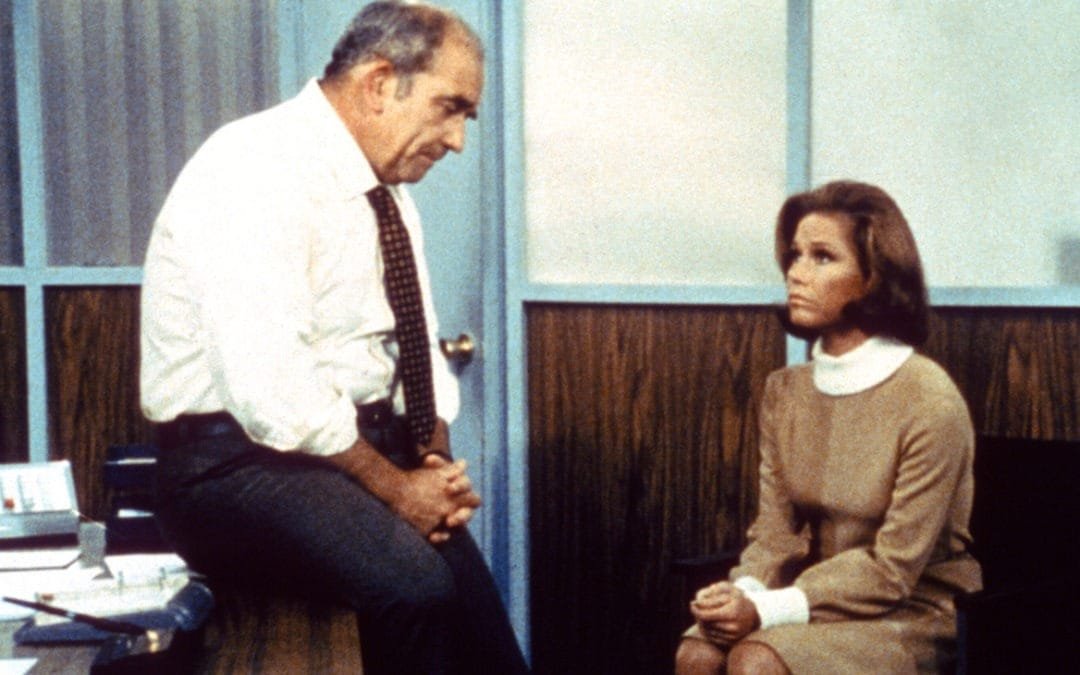
In an office, who makes the decisions?

Is it the manager? Supervisor? General staff?

Do these questions matter? Absolutely, because how this question is answered reveals much about how an individual views reality itself.

While a manager is responsible for the strategic direction of a particular unit of people, he/she cannot be responsible or privy to every decision made by staff.

Often times, a manager can become bogged down in the ‘what’ of something rather than the ‘how’ and/or ‘why,’ and the distinction between the two mindsets is not one of semantics. If a manager is to guide a team, this individual must lead by example as opposed to attempting to direct the behaviors and actions of those under his/her care.

It is an easy trap into which one may fall, however, as managers experience psychological pressures that differ substantially from those of general staff. Whereas managers often become enmeshed in the pursuit of tangible benchmarks for success — units sold, numbers served, etc — staff are more concerned with how to complete the tasks presented to them.

Whereas managers have some discretion to make any number of decisions, staff often are ‘forced’ into a decision based on sets of variables not under their control.

When making a decision, a manager should take into account several factors that have nothing — and yet everything — to do with the business problem at hand. These factors include the organization’s culture, general philosophy and the people expected to behave and perform differently as a result of the decision that has been made.

How will this decision impact my staff? Is it logical? Is it achievable? Does it make general sense?

When making decisions for others, it is important to recognize that what might make the most business sense may not make the most sense given available resources and human capital at hand…

About Spaciology

Spaciology is not abstract theory; rather, it is a practice you can feel.

  • Inside: Pause, breathe, notice.
  • Outside: Design rooms, rituals, and agendas that slow the spin and invite care.
  • Between us: Make dialogue a place where different truths can live together long enough to teach something.

Ultimately, leadership is the art of making space for what’s important (for everyone) and letting that clarity shape the next step. When we change the spaces from which we lead, our strategies change with them.

Spaciology Learning Commons

Want to go further? Join the Spaciology Learning Commons.

  • Free membership gives you access to community conversations and introductory resources.
  • Paid membership opens full access to courses, live sessions, and the complete Field Guide.

Stay in Touch

The Truth

The Truth

The truth.

It is a fascinating concept and one that supports how many of us go through our everyday lives. There is some sort of ‘truth’ that supports our cultural values, approach to life, or how we build our business(es). 

Really? Is there really such a thing as truth when it comes to something as nebulous as our very existence? Are we going to take control of our lives from that big, black, large universe that still begins even as it ends billions of light years away? Can we monetize this somehow?

There is something incredibly hollow about a life defined only by cultural rules and mores designed by others–namely, men. Culture is a construct. If you were born in India, your paradigm would be different. If you were born in 1953, you would be different.

If all we can do to answer a question is to reference cultural constructs–the very nature of which we purportedly are trying to bring down–then are we not in fact supporting their efficacy?

What do you think about yourself? What do you love? What are you? What are you at 9:45 pm at the end of the day and you feel as if you wasted another day in a life you would rather not believe is finite?

There is a wonderful beauty in allowing ourselves the opportunity to experience and fully digest the very real possibility that our truth may be that we simply do not know. When we bounce around purchasing products or another series of “Masterclasses” that provide us with canned sets of unoriginal, but beautifully presented ideas, we feed the machine we are trying to overthrow.

What is the machine? The machine is the voice in your head from which you seek your counsel. Yes, that voice. Is it the only voice in your head? Only you know that. Only you know your truth.

This does not mean there is no value in sharing your thoughts and feelings with others. Rather, it means there is a deeper context to reality we all sense, but rarely discuss.

We are all mortal and we are all going to die. That is a truth…

About Spaciology

Spaciology is not abstract theory; rather, it is a practice you can feel.

  • Inside: Pause, breathe, notice.
  • Outside: Design rooms, rituals, and agendas that slow the spin and invite care.
  • Between us: Make dialogue a place where different truths can live together long enough to teach something.

Ultimately, leadership is the art of making space for what’s important (for everyone) and letting that clarity shape the next step. When we change the spaces from which we lead, our strategies change with them.

Spaciology Learning Commons

Want to go further? Join the Spaciology Learning Commons.

  • Free membership gives you access to community conversations and introductory resources.
  • Paid membership opens full access to courses, live sessions, and the complete Field Guide.

Stay in Touch

Selfies

Selfies

There is something unnerving about our reliance on presenting ourselves to “the world” through the use of ‘selfies.’ It is as if our ability to capture an image of ourselves with the use of a phone’s camera indicates something about our inherent power as humans. How many people are out there explaining to us that all we need to do is X, Y, and Z, and we will somehow achieve our dreams? Must our dreams be quantifiable to the masses? Must we curate ourselves for an audience that for the most part really does not truly care for our struggles at all, but rather the image of “perfection” we instead project? Is anyone else exhausted from the hordes of individuals peddling their senseless ‘wares’ to the masses, as if they have the answers alone? Must we suffer through one more pointless podcast that we immediately forget when we put down our phones and return to our real lives? Let me qualify the above statement, as not all podcasts are pointless. There are incredible podcasts out there, but there are also a plethora of podcasts that reinforce our brokenness as a society. The term, power, does not merely connote an idea of strength; rather, it also speaks of our fragility. We are born, we grow, we live, and we die. This universe is so vast that the word itself is empty, as worlds within worlds spin inside our molecules, while something we name dark matter is thought to make up nearly one-third of the matter-energy composition of the universe. Maybe ‘power’ can be reframed as a feeling of self. For instance, perhaps power is something we feel by ourselves in the woods on a hike at a moment in which we simply feel “okay” for a moment to be our fragile selves. Maybe power is an emotion we feel as we watch our kids grow up only to realize (later) we must let them go – literally and figuratively. Maybe power is recognizing that nothing we do matters in a universe that is so vast that it is still beginning 13.5 billion light years away. Maybe power is the recognition that everything matters. When we stop our lives to take pictures and tell the world how strong we are at that very moment, it is a wonderful sentiment, but perhaps it is misguided. Perhaps the energy we spend investing in our idea of the world might be best spent embracing ourselves so we may literally and figuratively embrace others. There is nothing necessarily wrong with ‘selfies’ at all. It could be viewed as an invitation. I suppose the question here is what do we wish to project through the use of a ‘selfie?’ Are we projecting our very selves, or are we projecting a passing interpretation of what we think we might be? But for whom is this projection? Why? Perhaps, a ‘selfie’ does not just refer to photography, but rather an intent to present parts of ourselves we feel comfortable sharing while omitting what we may consider ‘dark.’ What if we shared our darkness? What if we allowed others inside our brokenness? A wise woman said to me recently that our brokenness is what makes us whole. As a man, I have always run away from my brokenness. Perhaps many of us run from it. Perhaps Smokey Robinson says it best in Tears of a Clown

About Spaciology

Spaciology is not abstract theory; rather, it is a practice you can feel.

  • Inside: Pause, breathe, notice.
  • Outside: Design rooms, rituals, and agendas that slow the spin and invite care.
  • Between us: Make dialogue a place where different truths can live together long enough to teach something.

Ultimately, leadership is the art of making space for what’s important (for everyone) and letting that clarity shape the next step. When we change the spaces from which we lead, our strategies change with them.

Spaciology Learning Commons

Want to go further? Join the Spaciology Learning Commons.

  • Free membership gives you access to community conversations and introductory resources.
  • Paid membership opens full access to courses, live sessions, and the complete Field Guide.

Stay in Touch