The Loneliness

The Loneliness

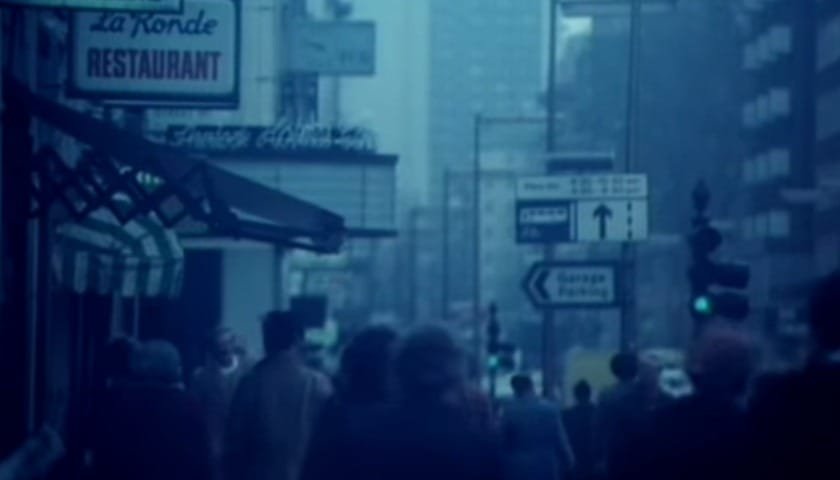
It has been reported that the feeling of loneliness may be correlated with the use of social media, and, even at face value, there seems to be merit in these reports.

It is rare–or does it even happen at all–when someone posts the moment of a sadness, the moment when something went absolutely wrong. “Wait, stay right there, let me grab my phone so I can take a picture of you crying at the news your grandmother just passed away.”

Such “moments” do not happen, because there is something patently absurd about stopping a moment to share it without fully experiencing it. There is something terribly isolating when one uses social media to the extent that it becomes embedded in one’s experiences of moments.

We are missing something out there, and technology can capture it. wait, we can edit the moment with a filter. We can edit reality itself, right?

Maybe we can. Maybe reality is turning into a digital experience. Maybe we are evolving, and love, hate, anger and sadness can all be adequately felt through a screen.

There just seems to be something so lonely about the experience of social media, staring down at a tiny screen, plugging into a matrix that mines your use of it for data that is then sold to companies that try to sell you. Social media is not all bad. There are wonderful moments captured on there that indeed are beautiful, raw, poignant.

Rather, we are referring to the rank and file, the ones who watch others on social media in abject silence. These are the forgettable people who are not worthy of being watched themselves. They are lonely, maybe even petty, possibly not. They are right, however, about one thing. They are forgettable–as are most people, which is a shame.

About Spaciology

Spaciology is not abstract theory; rather, it is a practice you can feel.

  • Inside: Pause, breathe, notice.
  • Outside: Design rooms, rituals, and agendas that slow the spin and invite care.
  • Between us: Make dialogue a place where different truths can live together long enough to teach something.

Ultimately, leadership is the art of making space for what’s important (for everyone) and letting that clarity shape the next step. When we change the spaces from which we lead, our strategies change with them.

Spaciology Learning Commons

Want to go further? Join the Spaciology Learning Commons.

  • Free membership gives you access to community conversations and introductory resources.
  • Paid membership opens full access to courses, live sessions, and the complete Field Guide.

Stay in Touch

The Money

The Money

Ever notice that many entrepreneurs in this age bracket often resort to citing their own financial wealth as proof that others should follow their inherent “power” and step into their own proverbial “greatness?”

Honestly, there is something strangely endearing about such folks. They mean well, do well and generally are fine people, but there is a disconnect. Invariably, these individuals are talented in way society tremendously values, and it probably does not hurt that these people are very charismatic and physically attractive, which are traits that work well in social media.

Where is the 300-pound obese woman with a high school education on social media? She is inherently sweet, cares about others, but really possesses no talent or skill that will get her beyond her current station in life. Her value equates to $12/hr at a local fast-food chain, and it is the best she can do and she makes do with the little she has to her name.

What can entrepreneurs say to this woman? Maybe she is kind, mostly selfless with a heart if not of gold, then made out of silver. She is a woman we will never get to know, because she is removed from sight, hidden, shy and unattractive.

Moreover, she is poor — and in a society addicted to numbers, we cannot get past what she lacks. As entrepreneurs cite their 6 and 7-figure incomes, such individuals like this hypothetical, yet real, woman become marginalized, fictionalized and ultimately forgotten.

Do we want to know the truth? Do we value character, moral fibers, empathy? Yes and no.

If yes, we may be near December when we watch the Hallmark Channel and cry at the mere hint of the corny love we witness, but desperately crave in our bones. Of course, this is a fallacy, too. Some people are mean for many reasons, but let’s pretend that is not the case.

If no, then it is the rest of the year when we enter the grind and celebrate the “been there, done that” philosophy that explains too much around us. By explaining to others that we have already been where they have been and done what they have done, we render their narrative meaningless. In these cases, let’s just stand in front of the mirror and tell ourselves the stories we want to hear.

What is life about? It is about the money, and it is about everything else we feel, think, hate, love, forget, and manipulate each and every day.

Hey entrepreneur. Take your 6 or 7-figure income and shove it.

About Spaciology

Spaciology is not abstract theory; rather, it is a practice you can feel.

  • Inside: Pause, breathe, notice.
  • Outside: Design rooms, rituals, and agendas that slow the spin and invite care.
  • Between us: Make dialogue a place where different truths can live together long enough to teach something.

Ultimately, leadership is the art of making space for what’s important (for everyone) and letting that clarity shape the next step. When we change the spaces from which we lead, our strategies change with them.

Spaciology Learning Commons

Want to go further? Join the Spaciology Learning Commons.

  • Free membership gives you access to community conversations and introductory resources.
  • Paid membership opens full access to courses, live sessions, and the complete Field Guide.

Stay in Touch

The Speed

The Speed

Remember being a kid and thinking about adulthood? It seemed like a theory that would never be proven. Childhood lasted forever — every moment, experience, bowl of Quaker oatmeal seemed to require an eternity to complete. Fast forward a few years, and we begin to experience time differently. Time moves with such haste, such speed, and we begin to understand why grandparents cannot remember what happened last week. For them, their time is somehow broken down into decades–the 50’s, 60’s, the 70’s–when did they graduate high school?
The speed of time. As we age, we acquire mass, it seems, and the speed at which we move through life increases in direct opposition to our ability to maintain our physical selves. We see wrinkles, run slower if at all, and a sadness creeps in that can only be explained by the realization that we are mortal. Childhood ends when we realize the fundamental nature of time not only applies to us, it will bring us to our knees. If we have kids, then the even worse realization is that they will experience the same thing. There is a laconic beauty to life. We are born, we die–and in between we have no memory of the former and pretend the latter does not exist until the illusion no longer works. Like Siegfried and Roy, the tiger will get us…

About Spaciology

Spaciology is not abstract theory; rather, it is a practice you can feel.

  • Inside: Pause, breathe, notice.
  • Outside: Design rooms, rituals, and agendas that slow the spin and invite care.
  • Between us: Make dialogue a place where different truths can live together long enough to teach something.

Ultimately, leadership is the art of making space for what’s important (for everyone) and letting that clarity shape the next step. When we change the spaces from which we lead, our strategies change with them.

Spaciology Learning Commons

Want to go further? Join the Spaciology Learning Commons.

  • Free membership gives you access to community conversations and introductory resources.
  • Paid membership opens full access to courses, live sessions, and the complete Field Guide.

Stay in Touch

The Hate

The Hate

It is so easy to lay blame, point fingers, puff up our chests and essentially ‘hate’ what is around us.

Society subtly encourages angry thinking in its creation of various competitive platforms whereby people are challenged not to look within, but destroy something outside themselves.

Our lawns must be greener than our neighbors, our houses must be taller or shinier, we must be impervious to aging and eradicate our wrinkles. We need to join the gym and sweat, fight, and otherwise stick up our proverbial middle finger at a universe that is watching our every move.

Turn on the TV lately? We have reality shows where we have the unique opportunity to watch either rich or entirely boring people act stupid, ugly and just wrong. We cannot turn away, because it provides a glimpse into ourselves, and we have trouble loving that.

Love is not an action, a word or a thing. It is a way of life from which one cannot turn away, because it is at once an action and a thought, bound by space and time. It is a wave of energy, a particle, an electron floating, spinning, bouncing through the quantum universe.

In reality, though, do we know what love is? Do we really know? Does society really want us to love? Is that how things get promoted or sold?

Let’s place blame, assign guilt, puff up our chests like peacocks and parade before an empty universe. Let’s built towers and structure, monuments to ourselves that time will tear down over the eons.

Nothing we do will last. We will be the subject of incredible archaeological finds 175 million years from now. Will love last that long?

The answer is not clear, but the effort to love seems important. It matters. It is a feeling that is an end in and of itself. Will it last forever?

Does love really matter? For as long as we are on this earth, it does. Hate takes a short life and twists it into a black hole. Black holes are scary…

About Spaciology

Spaciology is not abstract theory; rather, it is a practice you can feel.

  • Inside: Pause, breathe, notice.
  • Outside: Design rooms, rituals, and agendas that slow the spin and invite care.
  • Between us: Make dialogue a place where different truths can live together long enough to teach something.

Ultimately, leadership is the art of making space for what’s important (for everyone) and letting that clarity shape the next step. When we change the spaces from which we lead, our strategies change with them.

Spaciology Learning Commons

Want to go further? Join the Spaciology Learning Commons.

  • Free membership gives you access to community conversations and introductory resources.
  • Paid membership opens full access to courses, live sessions, and the complete Field Guide.
Stay in Touch

The Validation

The Validation

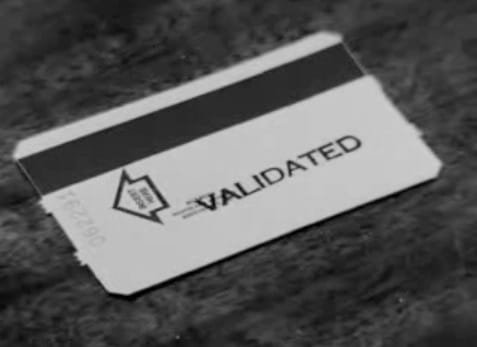
There is something deeply disturbing about the validation required by many today.

Did we eat the right food, say the right thing, buy the right product, look good doing it?

While not completely worthless–it is very rare when something can be designated in such a manner–social media is pretty close. Do we really need to say things to an audience of people that we for the most part do not know or honestly even care about?

Do you really care about Roger Jones, that dude you never talked to in 4th through 12th grade, but now 20 years later like each other’s posts about grilled cheese and babies?

Admittedly, there must be something biological that occurs when we post snippets of our lives on social media platforms. It sort of feels good. Yeah, our lives rock, our kids are too cute, our knowledge is too stellar.

It is crap. It really is a bunch of crap. There is something to be said for living within one’s own mind and heart and the parameters of a life you created with your own hands. A life that can be turned off or erased, which is entirely the case with social media, is not real.

The time we spend updating people we do not know, care about, or possible even like, can perhaps better be spent on the people with whom we work, love, or trying to love, etc.

There is an emptiness to social media, a puffing up of the proverbial chest, a step back into our primordial minds in which we must have sought validation wherever we could.

Validation cannot be bought, sold, or offered through video screens. Rather, it is an experience inside one’s mind, earned through breathing, letting go, crying, making mistakes, quitting jobs, landing them, giving birth, saying goodbye, falling down and getting up. 

Social media validates itself–that is all it does. It validates technology and the sadness we feel, but rarely express…

About Spaciology

Spaciology is not abstract theory; rather, it is a practice you can feel.

  • Inside: Pause, breathe, notice.
  • Outside: Design rooms, rituals, and agendas that slow the spin and invite care.
  • Between us: Make dialogue a place where different truths can live together long enough to teach something.

Ultimately, leadership is the art of making space for what’s important (for everyone) and letting that clarity shape the next step. When we change the spaces from which we lead, our strategies change with them.

Spaciology Learning Commons

Want to go further? Join the Spaciology Learning Commons.

  • Free membership gives you access to community conversations and introductory resources.
  • Paid membership opens full access to courses, live sessions, and the complete Field Guide.

Stay in Touch