
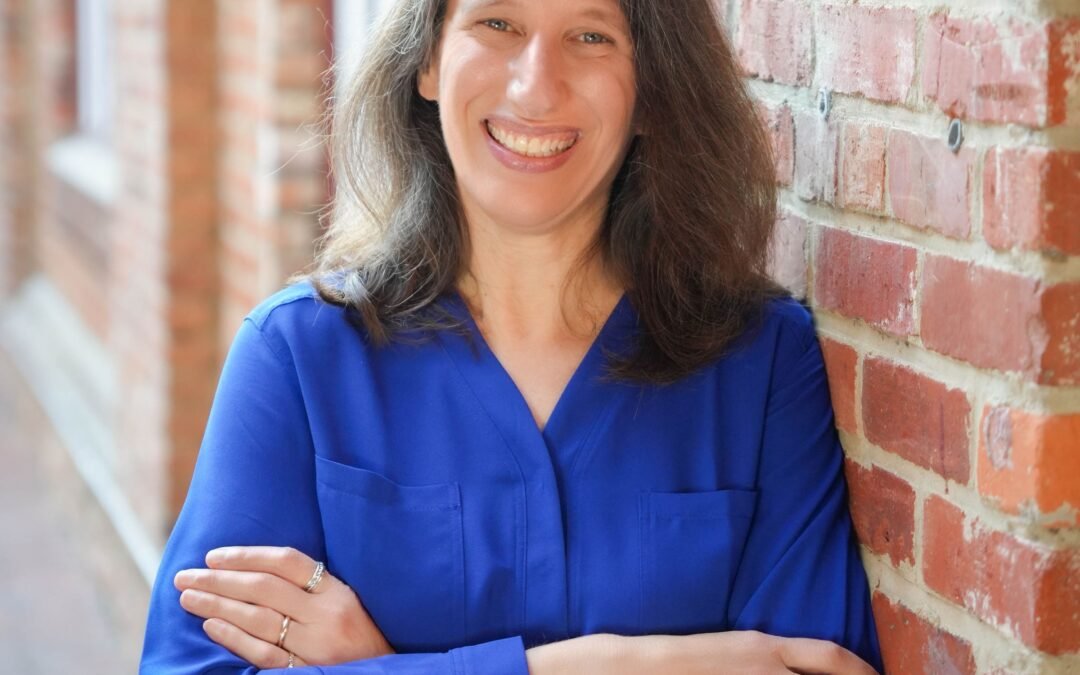
Melissa Segal
This is the latest in my dialogue series where I sit down with fellow professionals to explore their expertise and learn from their unique perspectives. Today’s conversation is with Melissa Segal of InterHuman Solutions, whose work in transforming workplace culture offers profound insights for leaders navigating the complexities of modern organizational dynamics.
Recently, I had the opportunity to connect with Melissa Segal, LCSW, founder of InterHuman Solutions, whose work with mission-driven organizations across North Carolina and beyond has revealed a fundamental truth: most workplace issues aren’t operational—they’re “interhuman.” What struck me most about our conversation was Melissa’s insight that the leadership models many of us learned are not only outdated but actively counterproductive to building the trust-based cultures that modern organizations need to thrive.
The Leadership Paradigm Shift: From Authority to Trust
“I was taught that leaders were supposed to be very strong, always exude confidence and tell people what to do. But I found that that is not what people wanted,” Melissa explained.
This revelation challenges the command-and-control leadership model that dominated organizational thinking for decades. Instead, Melissa’s work focuses on building trust—both with individuals and teams—recognizing that psychological safety and genuine connection are the foundations of productive workplace culture.
Her approach addresses what she calls the “interhuman” dimension of organizational life: the complex web of relationships, communication patterns, and trust dynamics that determine whether people want to come to work, disengage, or leave the organization.
The Leader as Co-Architect of the Problem
“I often find that there are confounding factors, including that the leader could show up differently.”
This insight reveals a pattern I’ve observed in my own work with organizations: leaders often externalize workplace dysfunction, failing to recognize their role in creating the very dynamics they want to change.
Melissa’s assessment process involves confidential conversations with all parties, allowing her to surface the complex reality behind workplace conflicts. Her role is to help both leaders and team members understand how their behavior contributes to team dynamics, guide them toward more effective ways of showing up, and work through conflict to resolution.
The Art of Deep Listening: Beyond Hearing Words
“I’m not listening to hear the words—I’m listening to understand and listening to what they are not saying. When someone feels heard, that is part of building trust—and they feel like they matter.”
This distinction between hearing and listening for understanding represents one of the most practical skills Melissa emphasizes. Deep listening involves asking open-ended questions, checking for understanding, and seeking to grasp the meaning behind the words.
The impact is profound: when people feel truly heard, they feel valued. This single act becomes the foundation for building trust and strengthening relationships across the organization.
Talking About the Elephants in the Room
“Talk about the elephants in the room. Let’s address the big issue that is looming. Talking around it does not help anyone.”
Melissa identifies this as another critical skill for transformational leadership: the courage to address difficult topics directly. Too often, she notes the real conversations happen in parking lots or bathrooms, while meetings dance around the core issues.
Creating structured opportunities for honest dialogue about challenging topics requires both skill and courage, and it is essential for moving beyond surface-level problem-solving to genuine organizational transformation.
Seeing the Full Human Being
“People are complex. When we make a connection with someone, we may develop a completely different view. Everyone brings their humanity into the room.”
This perspective challenges leaders to move beyond their preconceived notions and judgments. Melissa shared a powerful story about a physician who, after a conflict resolution process, realized: “When I walk into a room, anything I say and do can impact people there. They are human. I had never thought about that before.”
This shift in perspective—from seeing colleagues as functions or problems to recognizing their full humanity—transforms how leaders show up and interact with their teams.
What This Means for Leadership Practice
Melissa’s insights offer immediate applications for leaders committed to cultural transformation:
Start with Self-Reflection: Before addressing team dynamics, examine your own communication patterns and leadership behaviors. How might you be contributing to the challenges you want to solve?
Practice the Two-to-One Ratio: Use your two ears and one mouth proportionally. Listen more than you talk, even when you have brilliant insights to share.
Create Safe Spaces for Difficult Conversations: Identify one “elephant in the room” and design a structured opportunity for your team to address it openly.
Listen for Understanding: In your next one-on-one, focus entirely on understanding the other person’s perspective. Ask “What’s behind that?” and “Can you help me understand that better?”
See People as Whole Human Beings: Look beyond job functions and frustrations to recognize the complexity and humanity of each team member.
‘The Ripple Effect of Interhuman Leadership
What makes Melissa’s approach particularly compelling is its focus on sustainable change. Rather than providing quick fixes, her work empowers teams to have these crucial conversations independently, long after her engagement ends.
This model recognizes that true cultural transformation happens when leaders develop the skills to navigate complex interpersonal dynamics with authenticity, courage, and genuine care for the people they serve.
The goal isn’t just better workplace relationships—it’s creating environments in which people are excited to come to work and to remain engaged and committed to the organization.
Melissa’s expertise in organizational culture transformation offers valuable lessons for any leader committed to creating workplaces where people thrive. Her emphasis on trust-building, deep listening, and seeing the full humanity in others provides a roadmap for moving beyond traditional command-and-control leadership toward something far more effective and sustainable.
About Robert Levey
Founder of The Philosopher Files, Robert is a senior online adjunct faculty member at the UNH College of Professional Studies as well as a member of the Independent Philanthropy Advisor Referral Group.
About Melissa Segal and InterHuman Solutions
Melissa Segal specializes in transforming workplace culture through coaching, conflict resolution, and restorative practices. Based in Durham, NC, she works with mission-driven organizations, including nonprofits, healthcare, and academic institutions to build trust, create psychological safety, and develop the “interhuman” skills essential for organizational success. Learn more at InterHuman Solutions.
About Spaciology
Spaciology is not abstract theory; rather, it is a practice you can feel.
- Inside: Pause, breathe, notice.
- Outside: Design rooms, rituals, and agendas that slow the spin and invite care.
- Between us: Make dialogue a place where different truths can live together long enough to teach something.
Ultimately, leadership is the art of making space for what’s important (for everyone) and letting that clarity shape the next step. When we change the spaces from which we lead, our strategies change with them.
Spaciology Learning Commons
Want to go further? Join the Spaciology Learning Commons.
Membership gives you free access to community conversations, courses, introductory resources, and the complete Field Guide.
Stay in Touch
