
Space As Home (Part 3): From Heroics To Habitat

Space As Home (Part 3): From Heroics To Habitat

If internal space is the room you live in alone, shared space is the room you co-create with others.

Most of us were taught to treat relationships as emotional and ethics as philosophical. Spaciology refuses that split. Shared space is an environment—real, patterned, and consequential. It shapes who can speak, what can be said, what remains unsaid, and which truths are considered “professional,” “appropriate,” or “too much.” In my words: space is not neutral, and it is power-laden.

When I say shared space, I mean the lived field between people  attention, pace, silence, trust, fear, credibility, status, belonging. We all know what it feels like when a room tightens. We all know what it feels like when a room opens. We just rarely treat that knowledge as data.

Shared Space Is Where A Conversation Becomes Either A Home Or A Performance.


The Ethical Claim Hiding In Plain Sight

My Spaciology Manifesto says: Space is ethical. To make space is to make room for the Other.

Here is what that means. In any relationship—family, classroom, counseling room, meeting, community—someone’s reality is made easier to express, and someone else’s is made harder. This is not always malicious. It is often unconscious, but it is still ethical, because it shapes whose humanity gets to appear.

This is where my reframing of authenticity matters. Authenticity is not merely “being yourself.” It can be understood as a collective conditionare we creating spaces where multiple authenticities can coexist? This reframing relocates authenticity from personal branding to relational design.


Attention Is Never Just Attention

Attention looks like listening, but it also looks like structure. It looks like:

  • Who gets interrupted
  • Who gets summarized incorrectly
  • Who gets asked for “evidence” while others get belief
  • Whose anger is read as “passion” and whose anger is read as “threat”
  • Which topics are allowed to stay complex, and which must be simplified

This is why I say space “thinks with us.” It shapes cognition and behavior in the room. Spaciology operationalizes this with three simple moves: making space, mapping space, and maintaining space.


A Working Practice: The Ethics-Of-Attention Audit

Use this in a meeting, a family conversation, a classroom discussion, or any difficult dialogue. It is small enough to actually do.

  1. Make Space (Slow The Moment).
    Ask the group: “What matters enough here that we should not rush?”
  2. Map Space (Make Power Visible Without Shaming).
    Ask two questions and write the answers down:
    • “Whose voice has been centered so far?”
    • “Whose voice has not been heard yet?”

    Do not explain. Do not debate. Just name.

  3. Maintain Space (Turn Insight Into A Durable Agreement).
    End with one explicit commitment:
    • A turn-taking agreement
    • A check-in ritual
    • A revisit date for a hard decision
    • A documented decision with a rationale

Maintaining space matters because one-time insight does not sustain change. Agreements, revisit dates, and documentation protect the space after the conversation ends.


Space As Home, Again

In Part 1, I said home is not comfort. Here, I will add: home is not agreement.

Home is the experience of being able to exist without disappearing, which is why shared space is ethical. If someone must become smaller in order to belong, the space is not home. If someone must perform certainty to be respected, the space is not home. If only one kind of story can be told, the space is not home.

In post-normal conditions, we need fewer heroic declarations and more ethical spaces where conflict can be held without scapegoating, where difference can be engaged without domination, and where accountability is possible without humiliation.

About Spaciology

Spaciology is not abstract theory; rather, it is a practice you can feel.

  • Inside: Pause, breathe, notice.
  • Outside: Design rooms, rituals, and agendas that slow the spin and invite care.
  • Between us: Make dialogue a place where different truths can live together long enough to teach something.

Ultimately, leadership is the art of making space for what’s important (for everyone) and letting that clarity shape the next step. When we change the spaces from which we lead, our strategies change with them.

Spaciology Learning Commons

Want to go further? Join the Spaciology Learning Commons.

  • Free membership gives you access to community conversations and introductory resources.
  • Paid membership opens full access to courses, live sessions, and the complete Field Guide.

Stay in Touch

Into The Mystic

Into The Mystic

Watch

Read

And things end,
because they begin,
and the seasons pass me by
while I grow older,
not necessarily bolder,
because time is a circle
that spins,
and I chase it,
no one wins
this kind of race,
round and round I go,
I feel slow
so I attempt to pace
my self,
or I may face
myself,
and I would rather not,
because time slips through
my hands
as do my plans,
I am a poem
at midnight,
refusing to let yesterday go
or accept that what I feel
is all I know,
and yet life is not a cognitive affair,
but a dance with myself
on a planet that spins
in outer space,
and I’m anonymous
without a face,
waiting for the bus
to bring me to the place
I’m supposed to be,
an adult version of me,
a captain of a marvelous vessel,
exploring everything,
the sea
and gravity
and what it means to be
and not to be
in the same breath
for as long as I can
before death
when the fog horn whistle blows
and I sail into the mystic.

About Spaciology

Spaciology is not abstract theory; rather, it is a practice you can feel.

  • Inside: Pause, breathe, notice.
  • Outside: Design rooms, rituals, and agendas that slow the spin and invite care.
  • Between us: Make dialogue a place where different truths can live together long enough to teach something.

Ultimately, leadership is the art of making space for what’s important (for everyone) and letting that clarity shape the next step. When we change the spaces from which we lead, our strategies change with them.

Spaciology Learning Commons

Want to go further? Join the Spaciology Learning Commons.

  • Free membership gives you access to community conversations and introductory resources.
  • Paid membership opens full access to courses, live sessions, and the complete Field Guide.
Stay in Touch

The Universe, Kites, and Sadness

The Universe, Kites, and Sadness

Watch

Read

What is it I seek,
day after day,
week after week,
searching for space,
presence
and the grace
to accept the things I cannot change,
courage to change
the things I can,
and the wisdom to know the difference
between hanging on and letting go,
falling in and falling out,
to be and not to be,
what is me and not,
what I want and what I’ve got,
where I can and cannot,
and the difference is my belief
in what things mean,
the hidden
and the seen,
how things feel,
the real,
the true,
the distance,
the you
I thought
I heard
that day
in that way
where what I hear
is not what you say,
and so we drift
across the rift
and the expanse
of happenstance and chance,
and we dance
and we lift
ourselves up
past the sadness
and the mire,
higher
we rise
past blue skies
into outer space,
searching for home
and place,
the unusual,
the faint trace
of childhood
and the joy
of simple things,
laughter,
chocolate,
Saturday afternoons,
full moons
and sand dunes,
beaches
next to glass houses
that shimmered
at dawn,
perched on the edge of a tomorrow that never came,
because all things end,
and there is no name
that can explain
the pain,
or the grief,
the memories
and the belief
we carry in our hearts
in bodies that feel foreign
as we age
and outgrow
what we love
and what we know,
so I hold on
to what I let go,
and fall past earth and sky,
move past the how
and the why,
I live
and I die,
and try
as I might,
I’m a single example
of the plight
of the human
in its race
to be heard
with all its might,
8 minutes away from the sun
and its light,
we ride moonbeams
out of sight
into the night,
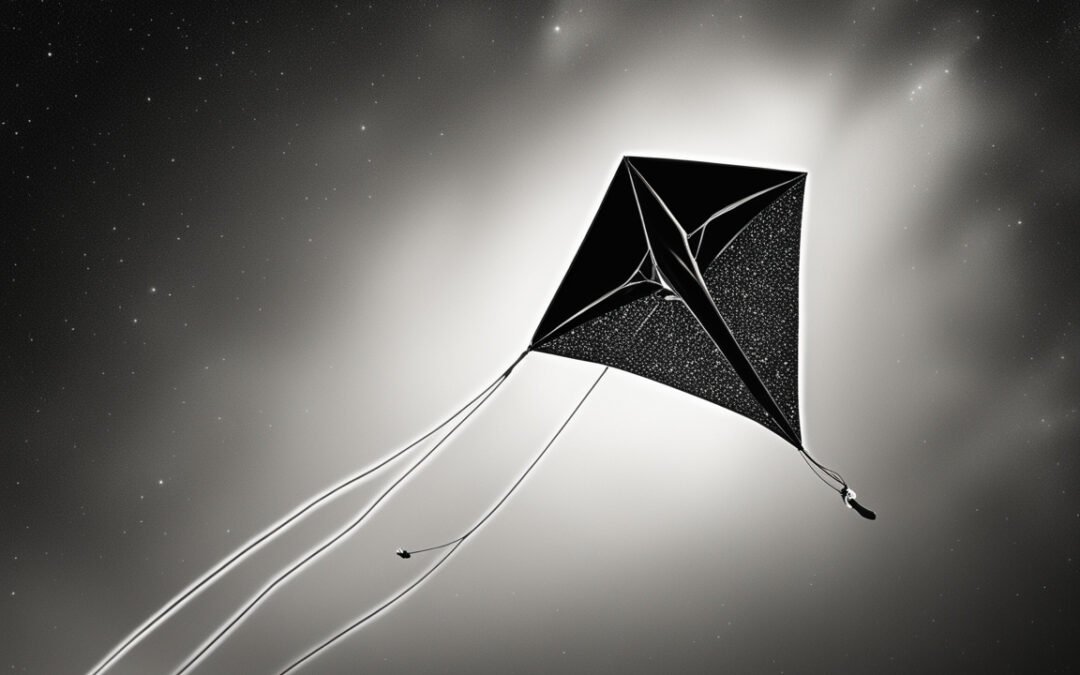
the universe is the string,
and I am a kite.

About Spaciology

Spaciology is not abstract theory; rather, it is a practice you can feel.

  • Inside: Pause, breathe, notice.
  • Outside: Design rooms, rituals, and agendas that slow the spin and invite care.
  • Between us: Make dialogue a place where different truths can live together long enough to teach something.

Ultimately, leadership is the art of making space for what’s important (for everyone) and letting that clarity shape the next step. When we change the spaces from which we lead, our strategies change with them.

Spaciology Learning Commons

Want to go further? Join the Spaciology Learning Commons.

  • Free membership gives you access to community conversations and introductory resources.
  • Paid membership opens full access to courses, live sessions, and the complete Field Guide.

Stay in Touch

Spaceship Earth

Spaceship Earth

Watch

Read

I woke up one day
on this spaceship called earth,
and I held on tight for what it’s worth,
you see,
there is this thing called gravity
that holds me
in place
on this molten rock
flying through space,
so I won’t be going anywhere anytime soon,
although I can gaze at the stars,
rainbows, and a moon,
snow in the winter,
and fireflies in June.
I can fall in love,
I can dream,
change my mind,
or hold my ground,
listen to the sound
of silence,
the silence in the sound
of not being heard,
the words we sometimes think
but do not say
when something isn’t okay,
like today,
with endless rules,
tools, and fools
selling their answers
from the back of their van,
telling us who can’t
and what can,
as if the mysteries of the universe
can be uncovered for a fee,
and that what it means to be me
is probably available for discovery
in ChatGPT.
Who do they think they are?
And what am I,
and why am I afraid
to cry in public
when I love the expression so much
and how it feels
to simply feel.
That’s real
to me,
and I won’t discover that
in ChatGPT,
or on TV.
That’s life,
and I’m a body
with hopes and dreams
of a boy not yet gone,
holding on
to the night before the dawn,
afraid of space,
the human race,
and anything that moves,
and I’m on a spaceship called earth.

About Spaciology

Spaciology is not abstract theory; rather, it is a practice you can feel.

  • Inside: Pause, breathe, notice.
  • Outside: Design rooms, rituals, and agendas that slow the spin and invite care.
  • Between us: Make dialogue a place where different truths can live together long enough to teach something.

Ultimately, leadership is the art of making space for what’s important (for everyone) and letting that clarity shape the next step. When we change the spaces from which we lead, our strategies change with them.

Spaciology Learning Commons

Want to go further? Join the Spaciology Learning Commons.

  • Free membership gives you access to community conversations and introductory resources.
  • Paid membership opens full access to courses, live sessions, and the complete Field Guide.

Stay in Touch

Dust in the Wind

Dust in the Wind

Watch

Read

There is nothing
real except the recognition
that real is what we feel
and not what we think
because to follow a thought,
even our own,
is to follow a ghost
and yet most
of us cling
to this thing,
this idea of what would be
and how we,
you and me,
would see
things differently
at a future date
in a place
where laughter must rule,
work is for the fool,
and tragedy a tool
in someone else’s tool box,
and we would dream
and row our boats,
merrily,
down a stream
to moments
that contain unbridled joy
and song,
heroes
and suns
that never set
if only we could let
ourselves
embrace
the certainty
of absolute truth
and the reality
that humanity
understands
grand plans
and the speed of light,
the mysteries of death
and the dark night
of the soul
within the body
of life
that holds us
as we breathe
and one day die
in the desert
that is space,
a place
without time
within which we chase
ourselves down dark alleys
past pubs and salons
where we offer comfort
to ourselves and one another
because there is no stream,
no dream
or cream
that can erase
the wrinkles of time
that wrap themselves
around our face,
creating space
for tears to hide
outside
as we age
inside the cage,
and yet if we look to see,
and not just to exist,
we can choose to explore
what it means to be or not to be
and resist
the urge
to explain to others
what things mean
and how to experience the mystery
and the tragedy
that is life,
because what we think is real
is merely a thought
that got caught,
and so we if can let that idea go
and step back from what we think we know,
we create more choices,
more spaces,
more voices
in the bittersweet symphony
of life
on a sphere
in a galaxy
too far
and too near,
so enigmatic
and dear,
neither there nor here,
spinning within
and without
year after year
until we are
dust in the wind

About Spaciology

Spaciology is not abstract theory; rather, it is a practice you can feel.

  • Inside: Pause, breathe, notice.
  • Outside: Design rooms, rituals, and agendas that slow the spin and invite care.
  • Between us: Make dialogue a place where different truths can live together long enough to teach something.

Ultimately, leadership is the art of making space for what’s important (for everyone) and letting that clarity shape the next step. When we change the spaces from which we lead, our strategies change with them.

Spaciology Learning Commons

Want to go further? Join the Spaciology Learning Commons.

  • Free membership gives you access to community conversations and introductory resources.
  • Paid membership opens full access to courses, live sessions, and the complete Field Guide.

Stay in Touch