
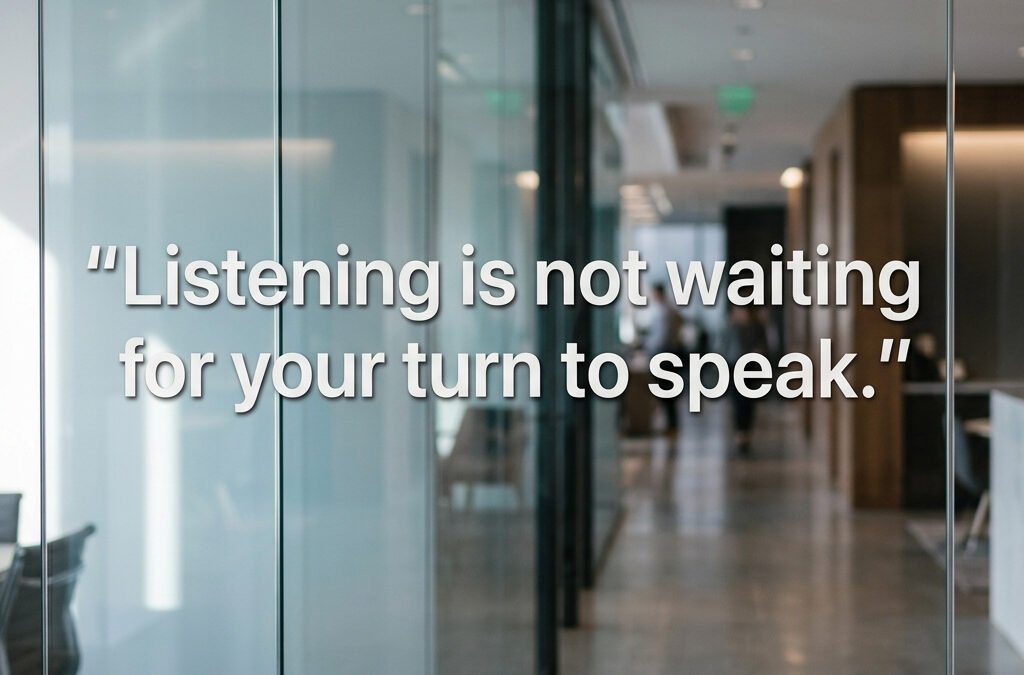
Much of what we call listening is really just waiting—waiting for the other person to finish so we can say what we have already decided to say, waiting for the pause where we can insert our story, our solution, our perspective that we believe will fix, complete, or redirect what they are sharing with us.
Listening Is Not Waiting
This is not listening. This is a performance of listening while we rehearse our response, and the people we love can feel the difference even when they cannot name it.
Listening as love is not a communication technique you can master in three steps or optimize with better questions. It is a practice of presence that asks you to set down the need to be right, to be helpful, to be seen as wise or caring or competent, and instead to simply be there in the space between their words and your own internal noise.
The disconnection we feel in our closest relationships often lives in this space—not because we do not care, but because we have confused caring with solving, understanding with agreeing, and presence with productivity. We listen for the problem we can fix instead of the person who is speaking, and in doing so, we miss the invitation to connect that exists in every conversation where someone trusts us enough to be vulnerable.
What Listening Actually Requires
Real listening requires you to notice when you have stopped paying attention to them and started managing your own discomfort with their pain, their uncertainty, their need to be heard without being fixed. It requires you to resist the urge to fill silence with advice, to redirect their experience toward a lesson you think they need to learn, to make their story about you by sharing a similar experience before they have finished speaking.
It requires you to trust that your presence matters more than your insights, that being with someone in their confusion, grief, or joy is more valuable than steering them toward clarity, comfort, or the next logical step. This feels counterintuitive because we have been taught that love is action, that caring means doing something, that listening without responding leaves the other person unsupported.
The people in your life do not need you to solve them. They need you to see them, stay with them in the uncertainty, and hold space for what they are experiencing without collapsing it into something easier for you to manage.
The Practice Begins With Noticing
You can start this practice today by noticing when you are waiting instead of listening—when you are composing your response while they are still speaking, when you are scanning their words for the point where you can jump in, when you are measuring their experience against your own instead of receiving it as it is. Notice without judgment, because this habit is not a personal failing but a learned behavior that most of us have been performing for decades.
Then practice staying present for one more sentence than feels comfortable, for one more pause before you speak, for one more moment of being with them instead of fixing them. This is how listening becomes love—not through grand gestures or perfect execution, but through the small, repeated choice to prioritize their experience over your need to respond.
Explore Further
Explore the philosophy of Spaciology, or follow these ideas into practice through RPL and UYM.
UYM Charities
Explore Spaciology’s ministry, Field Guide, teachings, and EcoDialogues. Talks, workshops, and facilitated conversations are offered without a required fee, supported by donations.
RPL
Narrative strategy and dialogue help people and organizations understand change, clarify purpose, and guide action through planning, fundraising, communications, and website development.