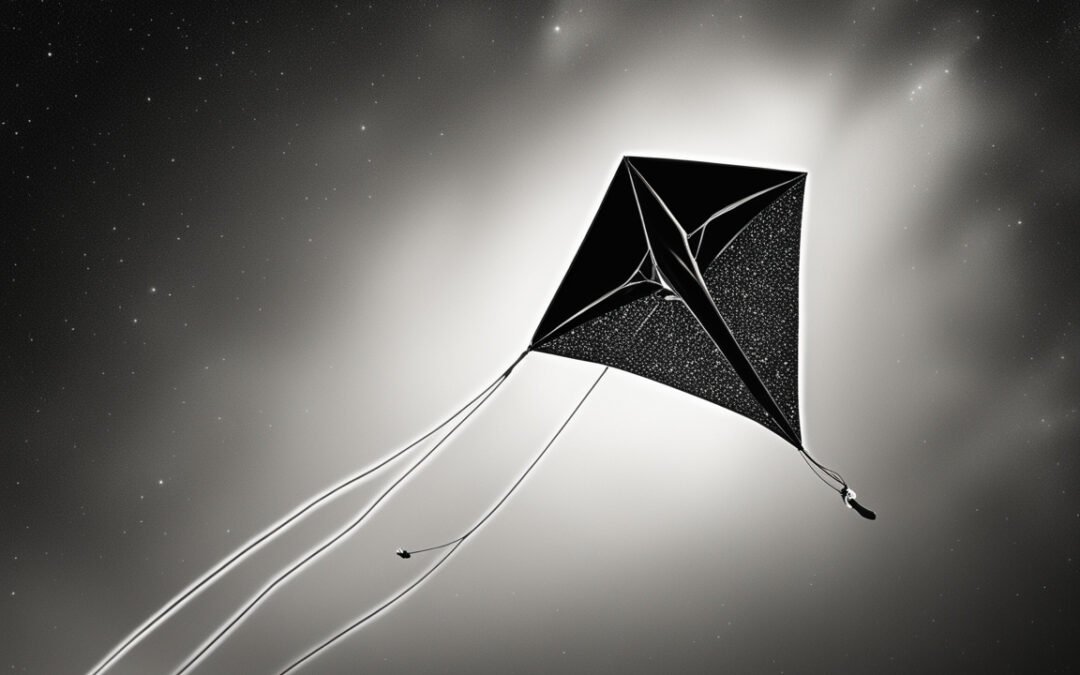
One-Hit Wonders

One-Hit Wonders

Watch

Read

I suppose we are all one hit wonders,
each heart beat
within every human
unique and melodic
in its own way,
every sunset poetic,
every tear prophetic,
each dream sacred
within the undulating folds
of each day
wrapped inside the memories of a universe,
composed of quantum
strings
that sing
across a Milky Way
on a Tuesday
afternoon
entertaining Thursdays
on Friday morning
when Mondays are forgotten
in the twilight of our lives
as we grapple with the questions
we were too afraid to ask
ourselves
when we chased time
and space
only to realize
that what we think
is not how we feel,
or real,
in the ways we were taught
in schools
with arbitrary rules
protected by men
and their tools,
fools
carrying ideas on their backs,
building bombs
and launching attacks
on outer spaces
that bleed
within hearts
that need
sunsets
and tears
more than numbers and years,
rivers and dreams
more than pots of gold,
laughter and love
more than certainty,
because rainbows
never grow old
nor do hearts
that open and fold
in a universe that may be black
yet need not be cold,
because the meaning of life
is in between the spaces we see,
it’s what we hold
and what we breathe,
blurring the difference
between you and me
earth,
sky
and sea,
as we wave
within another
for eternity,
blades of grass
swaying in open spaces
carrying the remnants
and faint traces
of the lives lost
and the cost
because silence
is a sound
that feels hollow,
and we are what we follow.

Stay in Touch

Spaciology Field Guide: Dialogue as Method — Witnessing Without Forcing

Spaciology Field Guide: Dialogue as Method — Witnessing Without Forcing

Dialogue as Method — Witnessing Without Forcing

Witnessing and being witnessed without forcing consensus; meaning co-creates between us.

Core Connections

  • Atlas Anchors: Shared Space, Space for Story, Space as Home
  • Charter Expression: Space Holds Story

Why This Matters

Most conversations aim to convince, correct, or reach agreement. Dialogue operates differently, as it creates space for multiple truths to coexist without requiring resolution. Through witnessing and being witnessed, new understanding emerges that neither person could have reached alone. Dialogue as Method recognizes that dialogue operationalizes story-holding and plural truths. It transforms conflict from win-lose battles into opportunities for deeper seeing.

Practice It Today

  • Rounds/no crosstalk — Each person speaks without interruption; no immediate responses
  • Paraphrase before reply — “What I heard you say is…” before adding your perspective
  • End with “one tending action” — Close by naming one thing you’ll tend based on what you heard

You Need This When

  • Conversations become binary fights
  • Agreement feels performative or forced
  • Important voices are missing or silenced
  • The same arguments repeat without progress

Ethical Cautions

Dialogue isn’t therapy—maintain appropriate boundaries. Clarify consent and safety practices before beginning. Don’t use dialogue to avoid necessary decisions or accountability.

Related Practices

Listening as LoveParticipatory DialogueNarrative Shift
The Generous Mindset: Making Room Before the Ask

The Generous Mindset: Making Room Before the Ask

Fundraising isn’t just about the ask—it’s about the space you create for generosity to emerge. When you lead with presence, not pressure, you open the door to authentic giving.


The Anxiety of the Ask

Most fundraising training skips one critical element: your internal state shapes the outcome of every donor conversation. When you enter with anxiety or desperation, you create what I call scarcity energy—a subtle but unmistakable sense of need.

This puts donors in a bind: they either have to “rescue” you or let you down. Neither scenario fosters transformational giving.


Generosity as a Starting Point

What if your first move was genuine curiosity about what matters most to your donor?

  • Pre-Meeting Check-In:
    • What outcome am I gripping onto?
    • What would it mean to be genuinely curious about this person’s vision?
    • How can I offer something valuable, regardless of whether they give?

This isn’t a strategy—it’s the foundation of authentic relationships, built on mutual generosity, not one-sided need.


Mapping Donor Intent

Instead of starting with your needs, start by understanding the donor’s intent:

  • What matters most to them personally?
  • What frustrates them about how things are currently done?
  • What does success look like from their perspective?
  • What role do they want to play beyond writing a check?

Tip: Create a simple donor-intent sketch before each major gift conversation.


The Somatic Check

Your body tells you when you’re grasping vs. offering. Before donor meetings, do a quick somatic check-in:

  • Notice: Are your shoulders tight? Is your breathing shallow? Are you rehearsing your pitch or preparing to listen?
  • Take three slow breaths and set this intention:
    “I’m here to understand what this person cares about and explore whether there’s alignment with our work.”

Reframing the Conversation


Reframe a Conversation

Replace pressure with presence:

  • Instead of “Here’s what we need,” say
    “Here’s what we’re creating. I’m curious about your thoughts.”
  • Instead of “Would you consider a gift of X?”, try
    “Based on what you’ve shared, I see some interesting connections. What questions do you have?”

Real-World Results

A nonprofit executive director implemented these practices:

  • Meeting-to-commitment conversion rate increased 40%
  • Second-gift rate (repeat donors) increased 60%

Relationships built on genuine connection—not transactional need—drive both results and retention.


The Paradox of Detachment

The more you cling to a specific outcome, the less likely you are to achieve it. Donors sense when you want something from them, not for the cause.

Care deeply about the relationship and shared vision, not just the transaction.


The Long Game

Fundraising is about creating space for people to express their values through action. When you do this, you build a community—not just a donor base.

Presence asks; pressure sells. In a world full of pressure, be the fundraiser who is truly present.

The most generous thing you can do is create room for someone else’s generosity to emerge—naturally and authentically.


This post is grounded in the Space as Metaphor framework, which views space as “metaphor for method, moral orientation, and mode of transformation.” The framework helps us understand grant writing relationships not as transactional exchanges, but as sacred spaces requiring careful cultivation and ethical stewardship.


Chasing Space, Finding Self

Chasing Space, Finding Self

Watch

Read

At the end of our lives, what will we think about? Will we remember those ‘important’ projects at work that diverted our attention from our children as they struggled to get our attention? Or will we remember what it felt like when our kids were old enough to no longer have time for us either?

Chasing Space

I saw a reel on social media the other day that tore me up, as the main message was that the majority of what we focus on in our daily lives is not only forgettable but damaging. Is the fact that AI exists and can perform half the tasks I do every day exciting, or does it underscore the futility of my own existence?

What am I chasing? What are any of us chasing? Do any of us even know? The more I chase this idea I have in my head as to what constitutes the ‘better life,’ the farther I am from this better life and, in fact, myself.

I once had someone refer to me as a ‘PR guy,’ as if the whole of my existence could be encapsulated in that term. That characterization made me ill then, and it makes me upset today.

This is the best I can do? I’m a PR guy? This is my contribution to the world? To write marketing pieces about products or services that may or may not be that worthwhile or great, but I am paid to tell a story, and so I spin someone else’s ideas into a 350-word structure that is as forgettable as it is forced?

What am I doing? I am chasing space.

Finding Space

Now, I am the space doctor, armed with a doctorate and an abstract concept that I peddle through various digital marketing channels to people I think I know enough or I would not put proverbial pen to paper, right?

What do I know? How do I know it? Where did I acquire my knowledge?

I took the academic pathway, too afraid to state an opinion and most certainly too uncertain to take a stand on anything. Perhaps that is my white privilege. I am unsure.

With the onset of fall, I feel myself more reflective, perhaps bitter that summer went too fast. Perhaps I am bitter, however, at my choices in life that I diverted my attention not just from my kids when they were 8 and wanted to play catch with daddy but from the journey into myself, which is the ultimate unknown.

Everywhere we turn today, someone has an answer to something or to a question we eventually believe we must have asked at some point. Yeah, I want to know the 5 secrets to develop great content. Sure, I want to create viral reels that people remember for a whole ten seconds before scrolling somewhere else.

Where has the time gone? How on earth am I on the other side of 50 years? This is impossible. All I ever wanted out of life was to live forever. Is that too much to ask?

Changing Space

When I talk about space, it is not an abstraction. Space is historical, and it invites an inquiry into the past and the lives that preceded our own. Space is literal in that we have bodies that move, dance, play, cry, and laugh. Space is metaphorical only in the sense that there is nothing that it can not not be, and so where does that leave us?

Like the Robinsons in that wild 60’s TV show, we are lost in space, spinning on a rock that circles a sun inside a galaxy that circles other galaxies in a universe so large that it takes 13.5 billion years to cross it if we were to travel 186,000 miles per second. That is not 55 miles per hour or 10,000 miles a minute, but 186,000 miles per second for 13.5 billion years.

At the end of our lives, what will we think about? However you and I answer that question, let’s agree to start thinking about that now instead of later…

Stay in Touch

Spaciology Field Guide: Decolonization — Honoring What Came Before

Spaciology Field Guide: Decolonization — Honoring What Came Before

Decolonization — Honoring What Came Before

Honor Indigenous and diverse ways of knowing; resist extraction; make room for difference and reciprocity.

Core Connections

  • Atlas Anchors: Space for History, Space for Indigeneity, The Field
  • Charter Expression: Space is Historical and Indigenous

Why This Matters

Every space we enter carries histories of those who came before—especially Indigenous peoples whose wisdom and ways of knowing have been systematically erased or extracted.

Decolonization isn’t just acknowledgment; it’s active resistance to extractive patterns and genuine commitment to reciprocity. This practice recognizes that space is storied and power-laden; decolonizing expands what can emerge.

When we honor diverse knowledge systems, we access wisdom that Western frameworks alone cannot provide.

Practice It Today

  • “History check” on proposals — Before new initiatives, ask “Who tried this before? What happened?”
  • Compensate knowledge keepers — Pay Indigenous consultants and elders for their wisdom and time
  • Pair land acknowledgments with material commitments — Connect recognition to reparative action

You Need This When

  • Histories and contributions are erased
  • The same harms keep repeating (déjà vu)
  • People say “we tried that before” with exhaustion
  • Solutions feel disconnected from place and people

Ethical Cautions

Avoid tokenism—real decolonization requires structural change, not just symbolic gestures. Center relationship and reciprocity over extraction of knowledge. Don’t appropriate practices without permission and proper context.

Related Practices

Accountability to HistoryRooted Decision-MakingEthical Grounding