The Universe, Kites, and Sadness

The Universe, Kites, and Sadness

Watch

Read

What is it I seek,
day after day,
week after week,
searching for space,
presence
and the grace
to accept the things I cannot change,
courage to change
the things I can,
and the wisdom to know the difference
between hanging on and letting go,
falling in and falling out,
to be and not to be,
what is me and not,
what I want and what I’ve got,
where I can and cannot,
and the difference is my belief
in what things mean,
the hidden
and the seen,
how things feel,
the real,
the true,
the distance,
the you
I thought
I heard
that day
in that way
where what I hear
is not what you say,
and so we drift
across the rift
and the expanse
of happenstance and chance,
and we dance
and we lift
ourselves up
past the sadness
and the mire,
higher
we rise
past blue skies
into outer space,
searching for home
and place,
the unusual,
the faint trace
of childhood
and the joy
of simple things,
laughter,
chocolate,
Saturday afternoons,
full moons
and sand dunes,
beaches
next to glass houses
that shimmered
at dawn,
perched on the edge of a tomorrow that never came,
because all things end,
and there is no name
that can explain
the pain,
or the grief,
the memories
and the belief
we carry in our hearts
in bodies that feel foreign
as we age
and outgrow
what we love
and what we know,
so I hold on
to what I let go,
and fall past earth and sky,
move past the how
and the why,
I live
and I die,
and try
as I might,
I’m a single example
of the plight
of the human
in its race
to be heard
with all its might,
8 minutes away from the sun
and its light,
we ride moonbeams
out of sight
into the night,
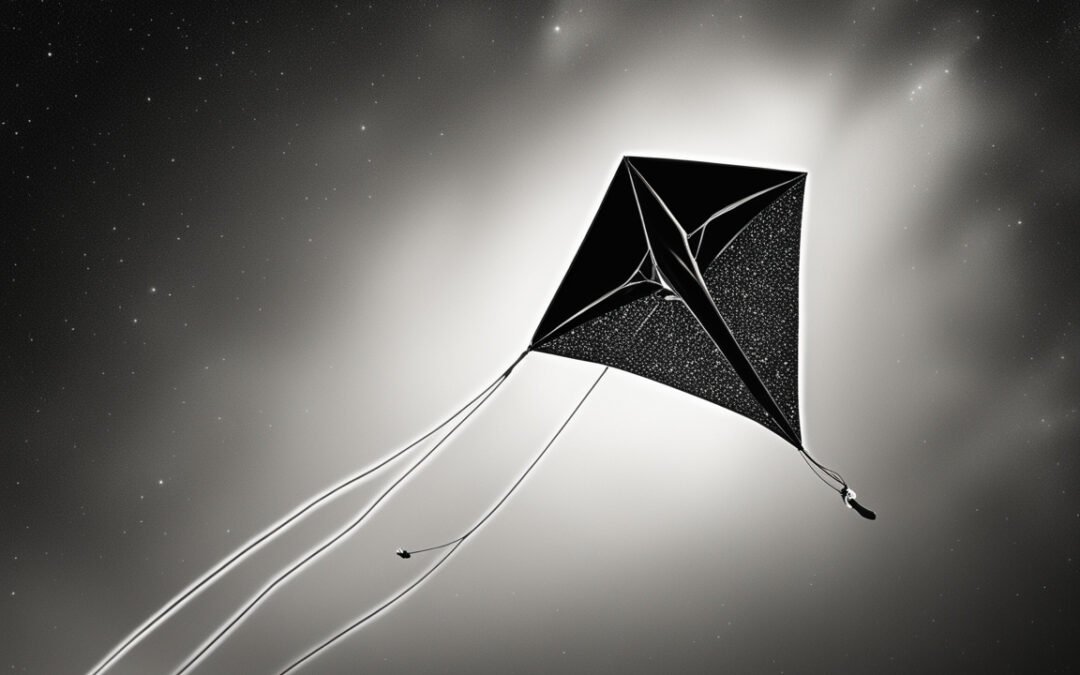
the universe is the string,
and I am a kite.

About Spaciology

Spaciology is not abstract theory; rather, it is a practice you can feel.

  • Inside: Pause, breathe, notice.
  • Outside: Design rooms, rituals, and agendas that slow the spin and invite care.
  • Between us: Make dialogue a place where different truths can live together long enough to teach something.

Ultimately, leadership is the art of making space for what’s important (for everyone) and letting that clarity shape the next step. When we change the spaces from which we lead, our strategies change with them.

Spaciology Learning Commons

Want to go further? Join the Spaciology Learning Commons.

Membership gives you free access to community conversations, courses, introductory resources, and the complete Field Guide.

Stay in Touch

Spaciology Learning Commons

Want to go further? Join the Spaciology Learning Commons.

Membership gives you free access to community conversations, courses, introductory resources, and the complete Field Guide.

Stepping Off the Train: Beyond Right and Wrong

Stepping Off the Train: Beyond Right and Wrong

Watch

Read

In these divisive times, it feels somewhat comfortable to gravitate toward an existing train of thought. This train goes left, and this one right.

Invariably, some of us shout at those who ride what we may perceive as the “wrong” train. Who determines the ‘wrongness’ of a particular train of thought? Who determines if it is “right?” Are not concepts of wrong or right arbitrary at best, catastrophic and limiting at worst?

Freedom

Recently, I came across a passage in Meeting Life by Krishnamurti. In it, he suggests that to be “ really revolutionary” means “non-acceptance of any pattern set by oneself or another, no sense of conformity, nor accepting any sort of authority, which means freedom from fear” (1991, p. 118).

Out of this freedom, we can “live a totally different kind of life” (p. 118-119). This is not a life established by those who have come before us nor a life experienced in the abstract.

No, life is not an abstraction nor can its meaning be captured in “brilliant articles” by “clever men” (p. 124). So what is life about?

Krishnamurti says it is about love, but do any of us see this love today? We do not love. “We have become brutal, callous, indifferent, ruthless. Without love you can solve nothing” (p. 125).

Krishnamurti uttered these words more than 50 years ago, yet their relevance to today cannot be overstated. Why don’t we love? This is the question.

Why don’t we love sunsets and shooting stars? Why don’t we love each other, especially the ones who grace our lives with their presence?

It is remarkably easy to allow oneself to drift into what is known. When something is known, something is lost.

Rediscovering the Mystery

Perhaps freedom from the known means rediscovering the mystery and the mysteries present in the experience of everyday life. A bowl of oatmeal with brown sugar and raisins. A piece of homemade bread with melted butter and orange marmalade. A single solitary butterfly wafting through the air on a Saturday morning in June just before 9 AM.

I also love trains, regardless of the direction they may travel, because ultimately they all return to the same station. Who runs this station?

Perhaps, this station is not a station at all. Perhaps, it is simply an open space, boundless, without tracks or timetables, through which we pass.

What if the real journey is not about choosing the right train but stepping off entirely? What if love is not found in the direction we take, but in the stillness between arrivals and departures?

Perhaps freedom is not about the next destination but rather about looking very deeply—past the station lights, past the timetables, past the tracks—into the infinite self.

About Spaciology

Spaciology is not abstract theory; rather, it is a practice you can feel.

  • Inside: Pause, breathe, notice.
  • Outside: Design rooms, rituals, and agendas that slow the spin and invite care.
  • Between us: Make dialogue a place where different truths can live together long enough to teach something.

Ultimately, leadership is the art of making space for what’s important (for everyone) and letting that clarity shape the next step. When we change the spaces from which we lead, our strategies change with them.

Spaciology Learning Commons

Want to go further? Join the Spaciology Learning Commons.

Membership gives you free access to community conversations, courses, introductory resources, and the complete Field Guide.

Stay in Touch

Spaciology Learning Commons

Want to go further? Join the Spaciology Learning Commons.

Membership gives you free access to community conversations, courses, introductory resources, and the complete Field Guide.