
Into The Mystic

Into The Mystic

Watch

Read

And things end,
because they begin,
and the seasons pass me by
while I grow older,
not necessarily bolder,
because time is a circle
that spins,
and I chase it,
no one wins
this kind of race,
round and round I go,
I feel slow
so I attempt to pace
my self,
or I may face
myself,
and I would rather not,
because time slips through
my hands
as do my plans,
I am a poem
at midnight,
refusing to let yesterday go
or accept that what I feel
is all I know,
and yet life is not a cognitive affair,
but a dance with myself
on a planet that spins
in outer space,
and I’m anonymous
without a face,
waiting for the bus
to bring me to the place
I’m supposed to be,
an adult version of me,
a captain of a marvelous vessel,
exploring everything,
the sea
and gravity
and what it means to be
and not to be
in the same breath
for as long as I can
before death
when the fog horn whistle blows
and I sail into the mystic.

About Spaciology

Spaciology is not abstract theory; rather, it is a practice you can feel.

  • Inside: Pause, breathe, notice.
  • Outside: Design rooms, rituals, and agendas that slow the spin and invite care.
  • Between us: Make dialogue a place where different truths can live together long enough to teach something.

Ultimately, leadership is the art of making space for what’s important (for everyone) and letting that clarity shape the next step. When we change the spaces from which we lead, our strategies change with them.

Spaciology Learning Commons

Want to go further? Join the Spaciology Learning Commons.

Membership gives you free access to community conversations, courses, introductory resources, and the complete Field Guide.

Stay in Touch

Spaciology Learning Commons

Want to go further? Join the Spaciology Learning Commons.

Membership gives you free access to community conversations, courses, introductory resources, and the complete Field Guide.

The Universe, Kites, and Sadness

The Universe, Kites, and Sadness

Watch

Read

What is it I seek,
day after day,
week after week,
searching for space,
presence
and the grace
to accept the things I cannot change,
courage to change
the things I can,
and the wisdom to know the difference
between hanging on and letting go,
falling in and falling out,
to be and not to be,
what is me and not,
what I want and what I’ve got,
where I can and cannot,
and the difference is my belief
in what things mean,
the hidden
and the seen,
how things feel,
the real,
the true,
the distance,
the you
I thought
I heard
that day
in that way
where what I hear
is not what you say,
and so we drift
across the rift
and the expanse
of happenstance and chance,
and we dance
and we lift
ourselves up
past the sadness
and the mire,
higher
we rise
past blue skies
into outer space,
searching for home
and place,
the unusual,
the faint trace
of childhood
and the joy
of simple things,
laughter,
chocolate,
Saturday afternoons,
full moons
and sand dunes,
beaches
next to glass houses
that shimmered
at dawn,
perched on the edge of a tomorrow that never came,
because all things end,
and there is no name
that can explain
the pain,
or the grief,
the memories
and the belief
we carry in our hearts
in bodies that feel foreign
as we age
and outgrow
what we love
and what we know,
so I hold on
to what I let go,
and fall past earth and sky,
move past the how
and the why,
I live
and I die,
and try
as I might,
I’m a single example
of the plight
of the human
in its race
to be heard
with all its might,
8 minutes away from the sun
and its light,
we ride moonbeams
out of sight
into the night,
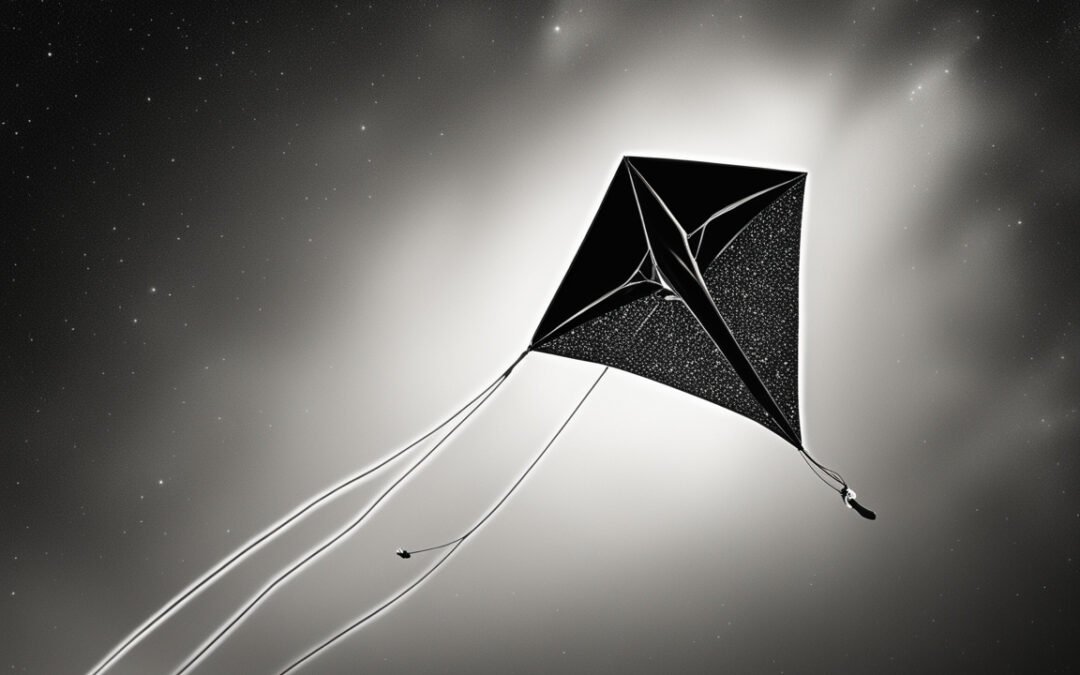
the universe is the string,
and I am a kite.

About Spaciology

Spaciology is not abstract theory; rather, it is a practice you can feel.

  • Inside: Pause, breathe, notice.
  • Outside: Design rooms, rituals, and agendas that slow the spin and invite care.
  • Between us: Make dialogue a place where different truths can live together long enough to teach something.

Ultimately, leadership is the art of making space for what’s important (for everyone) and letting that clarity shape the next step. When we change the spaces from which we lead, our strategies change with them.

Spaciology Learning Commons

Want to go further? Join the Spaciology Learning Commons.

Membership gives you free access to community conversations, courses, introductory resources, and the complete Field Guide.

Stay in Touch

Spaciology Learning Commons

Want to go further? Join the Spaciology Learning Commons.

Membership gives you free access to community conversations, courses, introductory resources, and the complete Field Guide.

One-Hit Wonders

One-Hit Wonders

Watch

Read

I suppose we are all one hit wonders,
each heart beat
within every human
unique and melodic
in its own way,
every sunset poetic,
every tear prophetic,
each dream sacred
within the undulating folds
of each day
wrapped inside the memories of a universe,
composed of quantum
strings
that sing
across a Milky Way
on a Tuesday
afternoon
entertaining Thursdays
on Friday morning
when Mondays are forgotten
in the twilight of our lives
as we grapple with the questions
we were too afraid to ask
ourselves
when we chased time
and space
only to realize
that what we think
is not how we feel,
or real,
in the ways we were taught
in schools
with arbitrary rules
protected by men
and their tools,
fools
carrying ideas on their backs,
building bombs
and launching attacks
on outer spaces
that bleed
within hearts
that need
sunsets
and tears
more than numbers and years,
rivers and dreams
more than pots of gold,
laughter and love
more than certainty,
because rainbows
never grow old
nor do hearts
that open and fold
in a universe that may be black
yet need not be cold,
because the meaning of life
is in between the spaces we see,
it’s what we hold
and what we breathe,
blurring the difference
between you and me
earth,
sky
and sea,
as we wave
within another
for eternity,
blades of grass
swaying in open spaces
carrying the remnants
and faint traces
of the lives lost
and the cost
because silence
is a sound
that feels hollow,
and we are what we follow.

About Spaciology

Spaciology is not abstract theory; rather, it is a practice you can feel.

  • Inside: Pause, breathe, notice.
  • Outside: Design rooms, rituals, and agendas that slow the spin and invite care.
  • Between us: Make dialogue a place where different truths can live together long enough to teach something.

Ultimately, leadership is the art of making space for what’s important (for everyone) and letting that clarity shape the next step. When we change the spaces from which we lead, our strategies change with them.

Spaciology Learning Commons

Want to go further? Join the Spaciology Learning Commons.

Membership gives you free access to community conversations, courses, introductory resources, and the complete Field Guide.

Stay in Touch

Spaciology Learning Commons

Want to go further? Join the Spaciology Learning Commons.

Membership gives you free access to community conversations, courses, introductory resources, and the complete Field Guide.

The Sun Will Never Set

The Sun Will Never Set

Watch

Read

There is a world inside
every song 
experienced in every heart
within the souls
of those who live on planets
that spin
inside galaxies that turn,
dreams that burn
within
the hopes and fears
of lost men at sea,
always searching
for the elusive ‘me’
within the me
that cannot change
because it must not die
nor must we try
to decipher
because
there is space
in every time,
time in every space,
love in every trace
of what once was
alive and real,
tangible and could feel
the wind,
the fire,
the earth,
and the sea
that churns beneath
the sky,
the dome,
the envelope,
the home,
the beauty
amidst the fear
behind the smile,
perched on the tear
of the woman
who holds
and carries the sphere,
the here
beyond the now,
past the how,
outside the known,
beneath the love,
outside thought,
before yesterday
and tomorrow
exists a universal sorrow
that once one is,
one eventually will not,
and yet galaxies will spin
and light will travel
and the sun will never set.

About Spaciology

Spaciology is not abstract theory; rather, it is a practice you can feel.

  • Inside: Pause, breathe, notice.
  • Outside: Design rooms, rituals, and agendas that slow the spin and invite care.
  • Between us: Make dialogue a place where different truths can live together long enough to teach something.

Ultimately, leadership is the art of making space for what’s important (for everyone) and letting that clarity shape the next step. When we change the spaces from which we lead, our strategies change with them.

Spaciology Learning Commons

Want to go further? Join the Spaciology Learning Commons.

Membership gives you free access to community conversations, courses, introductory resources, and the complete Field Guide.

Stay in Touch

Spaciology Learning Commons

Want to go further? Join the Spaciology Learning Commons.

Membership gives you free access to community conversations, courses, introductory resources, and the complete Field Guide.

Space as Praxis: Making Room for What Matters

Space as Praxis: Making Room for What Matters

Watch

Read

Space begins within—and when we pause and resist the reflex to respond, fix, or judge, we create the conditions for clarity. This is not a passive space but a form of active receptivity.

“Stillness is not stagnation. It is what allows the unseen to surface.”

In practice, internal space could look like:

  1. Taking 5 minutes to breathe before a difficult decision,
  2. Journaling not to fix your thinking, but to see it,
  3. Asking “What is  here that I’m avoiding?” instead of “What should I do?”

Space makes reflection possible. Without it, we default to reaction. With it, we find presence (and ourselves).

External Space: Designing Environments That Reflect Intention

Our surroundings—physical spaces or organizational cultures—help shape our thoughts, feelings, and ability to relate to anything.

“The room you’re in speaks before you do.”

To apply space practically in the external realm:

  1. Declutter a workspace so it reflects the clarity you seek,
  2. Design meetings with planned moments of silence,
  3. Ask, “What kind of space would allow everyone here to feel seen (or heard)?”

External space is both literal and symbolic. When we shift external space(s) with intention, we communicate something powerful: you matter here.

Shared Space: The Art of Holding Together What We Cannot Solve Alone

Shared space is the realm of dialogue, collaboration, and community. It is what happens between us—not owned or controlled, but co-created.

“Shared space isn’t about agreement. It’s about making room for truths to sit side by side.”

To hold shared space in practice:

  1. Begin conversations by naming intentions rather than outcomes,
  2. Allow silence in dialogue—not everything needs a response,
  3. Model curiosity over certainty

Shared space requires a posture of mutual presence, not persuasion. It is what allows complexity to breathe and transformation to occur collectively.

The Ethics of Spaciousness

Creating space is an ethical act. In a culture of speed, certainty, and consumption, space feels inefficient. Inefficiency, however, is often where life actually happens.

“Making space means making room for others—not just their ideas, but their being.”

To practice ethical spaciousness:

  1. Resist urgency when it flattens complexity
  2. Invite voices that are usually missing
  3. Trust that emergence needs time, contradiction, and care

Key Considerations

Space is not emptiness; rather, it is the precondition for emergence.

  1. Internal space fosters awareness and emotional intelligence,
  2. External space shapes behavior and communicates values,
  3. Shared space enables trust, empathy, and collective transformation.

Creating space is not about doing less—it is about doing with more intention.

Closing Reflection

When we stop trying to fill every moment, fix every problem, or finalize every answer, we return to something more elemental: the quiet, expansive possibility of being (and becoming).

In a world aching for solutions, perhaps what is most needed is not more action—but more space…

About Spaciology

Spaciology is not abstract theory; rather, it is a practice you can feel.

  • Inside: Pause, breathe, notice.
  • Outside: Design rooms, rituals, and agendas that slow the spin and invite care.
  • Between us: Make dialogue a place where different truths can live together long enough to teach something.

Ultimately, leadership is the art of making space for what’s important (for everyone) and letting that clarity shape the next step. When we change the spaces from which we lead, our strategies change with them.

Spaciology Learning Commons

Want to go further? Join the Spaciology Learning Commons.

Membership gives you free access to community conversations, courses, introductory resources, and the complete Field Guide.

Stay in Touch

Spaciology Learning Commons

Want to go further? Join the Spaciology Learning Commons.

Membership gives you free access to community conversations, courses, introductory resources, and the complete Field Guide.